

Without Witnesses
Learning that motherhood doesn’t end when your babies die.

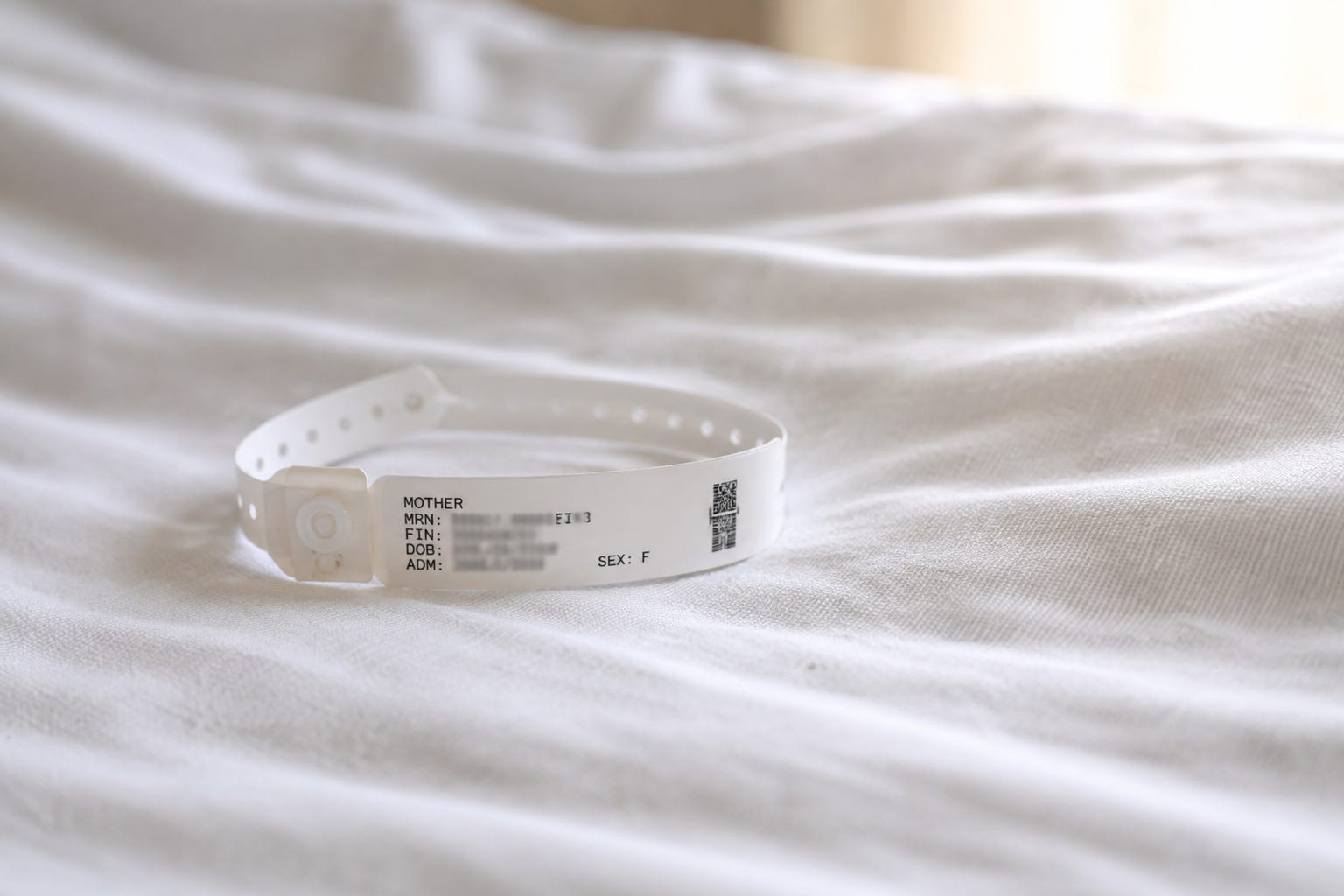
I remember the walk back to the parking garage more clearly than I remember leaving the hospital.
The appointment had become a kind of postmortem M&M conference.
Except, I was the one leading it.
I, the brand newly bereaved mother.
I, the patient, not the physician.
But none of that actually mattered.
That morning become a series of goodbyes.
The kind you never really come back from.
And then, somewhere between the Maternal Fetal Medicine office and our car, I looked at my husband and said,
“Well… I delivered not one, but two babies this morning, and nobody is ever going to ask to see them. Right now that feels like the most heinous part of this nightmare.”
At the time, I thought I was talking about other people.
Now I think I was trying to convince myself that what had just happened was even real in the first place.
Because when your baby dies in your hand, in front of your eyes, at home, in the middle of the night, the world doesn’t always know where to place your motherhood.
People know how to celebrate new babies.
They know to ask for pictures.
To ask how much they weighed.
Who they look like.
Whether they’re sleeping.
Whether you’re sleeping.
They don’t know how to ask about the babies who don’t come home.
Most don’t ask at all. It’s just too hard to find the words.
I’ve often thought about how remarkable it is that we expect first-time parents to know both so little and so much the moment their family expands from two to three.
There are childbirth classes.
Breastfeeding classes.
Books for every week of pregnancy and every stage of infancy.
But nowhere does anyone tell you that becoming a parent is less like learning a new skill than being dropped into a new planet while everyone assumes you’ll already know the language
Then, overnight, you’re responsible for keeping another human being alive. There are no days off. No PTO. No training period. You’re exhausted, overwhelmed, terrified, and convinced everyone else somehow knows what they’re doing better than you do.
New parents spend months asking questions.
Is this normal?
Who should I call?
Should I be worried?
And almost every question has somewhere to go.
What about when your baby dies? .
There are no instructions.
There’s not even anything that looks like it could potentially be an instruction.
No one tells you what it feels like to walk around in the world inside a body that still feels very much postpartum, that is profusely and hysterically bleeding, that often times already has had milk come in, feels swollen, traumatized, and exhausted.
They only see empty arms, and they cannot do the math between what was what is and what should’ve been
No one tells you how to answer when someone asks if you have children, or how many children you have now.
No one tells you whether it will always hurt this much.
That was the question I carried the longest.
The heaviest one.
It still finds me sometimes without warning.
Standing in the grocery store.
Driving home.
Folding laundry.
It arrives before I realize I’ve been thinking about Noah.
Not Why me?
Not How did this happen?
Just…
Is this ever going to hurt less?
For a long time, I mistook functioning for healing.
I answered emails.
Made dinners.
Packed backpacks.
Showed up to work.
Remembered birthdays.
Paid bills.
I smiled when I was supposed to smile. I laughed when something was funny. I tucked my daughter into bed each night and somehow kept moving through days that should have been impossible.
From the outside, it probably looked like I was surviving remarkably well.
From the inside, it felt like someone had quietly unplugged me from my own life.
I wasn’t forgetting Noah.
I was forgetting myself.
I couldn’t have told you then that I was dissociating. I didn’t have that language.
I only knew there was a strange spacer between what had happened and what I was able to feel. My mind seemed to ration grief into portions small enough that I could keep putting one foot in front of the other.
Looking back now, I think that distance saved my life.
It also delayed it.
For six months, I don’t think I actually fully wrapped the tragedy I’d been forced to survive.
Or maybe I couldn’t know.
Looking back now, I think my body just kept moving because it had to. My brain protected me from a grief too large to hold all at once. It also allowed me to continue parenting my then 2.5 year old living daughter while still presenting to her as “mommy.”
Then one day the protection wore off.
The unraveling began.
Ironically, I think that was the moment I actually started grieving.
Loss is complicated.
Our story began with Vanishing Twin Syndrome.
Victoria existed first as hope.
As possibility.
Her absence complicated everything that came after because I spent weeks believing the baby I’d continue carrying was my daughter.
By the time I learned the truth, I had already rearranged my heart around the baby I thought had survived.
Instead, it was Noah.
Noah wasn’t possibility.
He was here.
He was born alive.
He lived.
Only for a minute.
Sometimes people try to rank griefs, as though one somehow cancels another.
They don’t.
Victoria and Noah occupy different places inside me.
One was the loss of the future I imagined.
The other shattered the definition of motherhood I’d spent my entire life building.
Before Noah, I thought motherhood ended with bringing a baby home.
After Noah, I learned motherhood could exist without witnesses.
Without photographs on the mantel. Without school pictures. Without anyone outside your family ever knowing your child existed.
Without birthday parties.
Without first steps.
Without anyone asking to see your baby.
I still don’t know if grief hurts less.
I think it hurts differently.
I think I’ve simply become stronger at carrying it.
And if I could go back to the woman walking through that parking garage, still bleeding, still postpartum, still a mother despite feeling invisible and heartbroken, I don’t think could tell her it gets easier.
But I do think that I could, and then I would tell her the truth. I’d kneel beside her instead. I’d take her hand, look her in the eyes, and say the words I wish someone had said to me..
I’m heartbroken with you.
And I’m heartbroken for the version of you who will never again believe the world makes sense.
Because all of the versions of me were right. 🙈
I will never be the same.
But I will still be Noah’s mother.
One day I’ll realize that nobody asking to see him doesn’t mean he wasn’t here.
It only means the rest of us have to get better at asking.
Every baby deserves to be witnessed.
Even the ones whose entire lives fit inside a single minute.
I imagine how it would be different if there was a circle of wise women who surrounded you in your loss and grief, who held you while you healed.